Paro Dzong
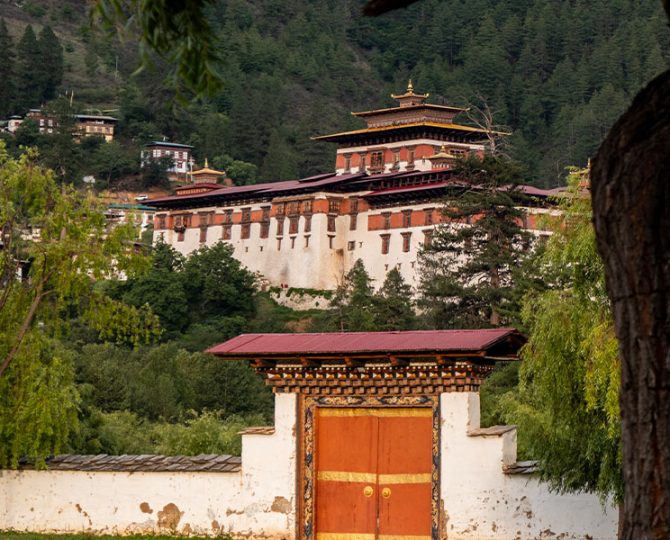
A short distance from Amba Paro lies the majestic Paro Rinpung Dzong, one of Bhutan’s most iconic landmarks and a stunning example of traditional Bhutanese fortress architecture. Known as the “Fortress of the Heap of Jewels,” this historic dzong dates back to the 17th century and continues to serve both as a religious center and the seat of local government.
With its towering whitewashed walls, intricately carved woodwork, and dramatic setting above the Paro River, Rinpung Dzong offers visitors a glimpse into Bhutan’s spiritual and architectural legacy. The dzong also plays host to the vibrant Paro Tsechu, one of the most celebrated festivals in Bhutan.
Ideal for those interested in cultural attractions in Paro, Bhutanese monasteries, and heritage sites, a visit to Paro Rinpung Dzong is a highlight of any journey through the valley.
National Museum of Bhutan
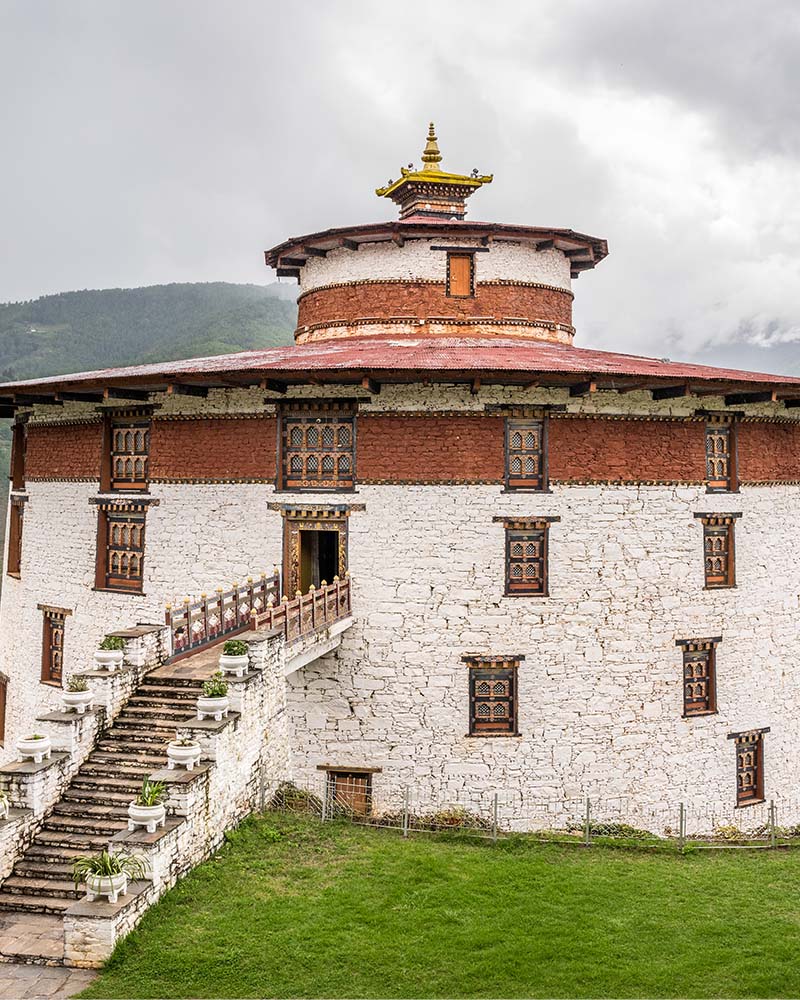
Just a short drive from Amba Paro, the National Museum of Bhutan is one of the country’s most important cultural landmarks. Set high above the historic Rinpung Dzong, this iconic museum is housed in the Ta Dzong, a 17th-century watchtower originally built to protect the Paro Valley during times of war. Its rare circular design, modeled after a conch shell—a symbol of victory in Buddhism—makes it one of the most architecturally unique buildings in Bhutan.
Inside, visitors can explore a fascinating collection of Bhutanese artefacts, from traditional costumes and ceremonial masks to religious thangka paintings, ancient weaponry, textiles, and a renowned display of rare Bhutanese stamps. Each exhibit offers insight into the spiritual, artistic, and cultural richness of Bhutanese life.
The design philosophy of Amba Paro subtly draws inspiration from this very museum, with layered circular forms, textured stonework, and spaces that invite contemplation and connection—creating a harmonious link between Bhutan’s heritage and contemporary luxury.
For those looking to explore cultural sites in Paro, museums in Bhutan, or Bhutanese history and art, a visit to the National Museum is a must-add to your itinerary.
Kyichu Lhakhang
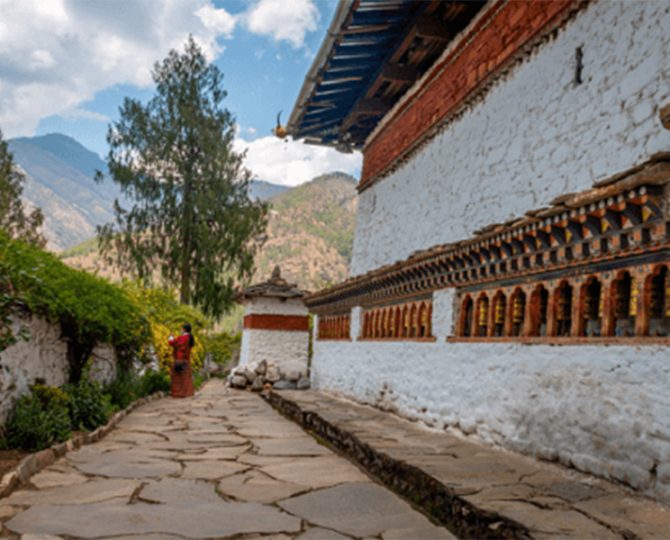
A visit to Kyichu Lhakhang is a journey into the spiritual heart of Bhutan. Located just a short drive from Amba Paro, this revered 7th-century temple is one of the oldest and most sacred religious sites in the country. Built by the Tibetan King Songtsen Gampo as part of a legendary effort to subdue a demoness lying across the Himalayas, Kyichu Lhakhang is considered a cornerstone of Bhutanese Buddhist heritage.
With its ancient orange trees that bear fruit all year round, intricately painted murals, and quiet courtyard, the temple continues to draw pilgrims and visitors seeking peace, blessings, and a deeper connection to Bhutan’s spiritual traditions.
Ideal for travelers exploring cultural sites in Paro, Bhutanese monasteries, or sacred Buddhist landmarks, Kyichu Lhakhang is a must-visit for anyone seeking to experience the timeless essence of Bhutan.
Dumtse Lhakhang
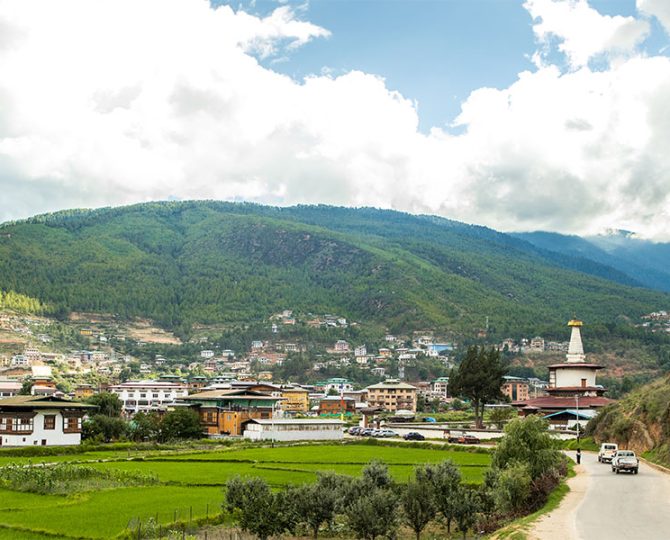
Located just outside Paro town, Dumtse Lhakhang is one of Bhutan’s most fascinating and spiritually rich temples. Built in the 15th century by the legendary Thangtong Gyalpo, known as the “Iron Bridge Builder,” this temple is a masterpiece of Bhutanese spiritual architecture and engineering vision.
Unlike any other temple in Bhutan, Dumtse Lhakhang is built in the shape of a chorten (stupa) and contains a series of three floors that represent hell, earth, and heaven—symbolizing the path to enlightenment. Inside, you’ll discover remarkably well-preserved wall paintings and iconography, offering a deep insight into Tibetan Buddhist cosmology.
For travelers interested in Bhutanese history, sacred art, and unique temples in Paro, a visit to Dumtse Lhakhang is a must.
Dzongdrakha Lhakhang
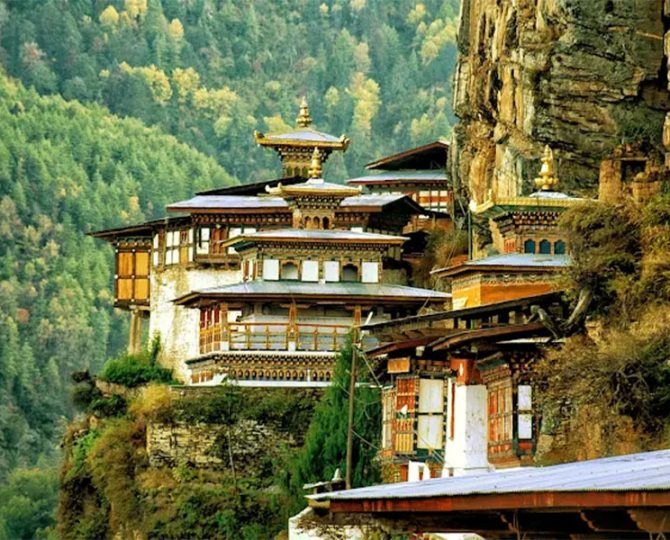
Perched dramatically along a cliffside just outside Paro, Dzongdrakha Lhakhang is one of Bhutan’s most revered and lesser-known spiritual sites. Often referred to as Dzongdrakha Nye, this ancient temple complex is believed to date back to the 8th century, when Guru Rinpoche (Padmasambhava) meditated here during his travels through Bhutan.
In the 14th century, the esteemed treasure-hunter Gonpo Dorji is said to have discovered a crystal stupa and a sacred relic of the Buddha at this very site, further cementing its spiritual significance. Surrounded by peaceful forest and traditional farmland, Dzongdrakha offers a serene and meaningful detour for those exploring Bhutan’s sacred heritage sites.
Perfect for guests seeking authentic cultural experiences in Paro, a visit here offers a quiet moment of reflection and connection to Bhutan’s living spiritual traditions.
Taktshang Monastery
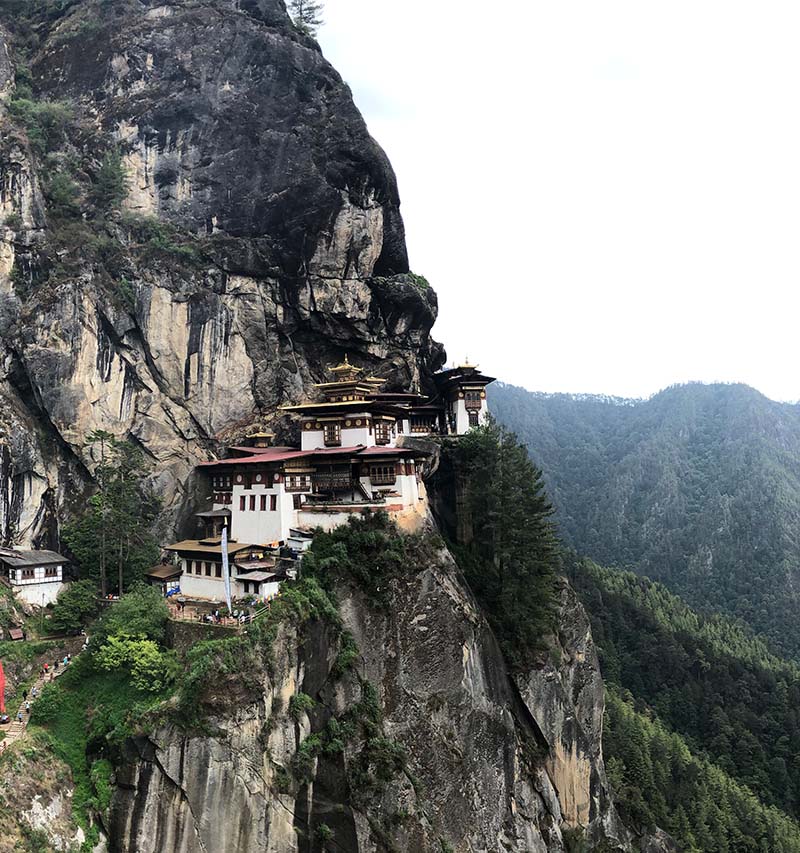
Early in the morning take a walk to the ‘Tiger’s Nest ’ the sacred Taktshang Monastery which clings to the rock face 900 meters above the valley floor.
First we drive for about 20 to 45 minutes (depending on where you are staying) to the car park where your hike to Tiger’s Nest begins. From the car park to the cafeteria the walk takes about 1.5 to 2 hours. The cafeteria offers a spectacular view of the monastery and you can enjoy a cup of tea if you wish.
From here you will have the option to continue up to the monastery which will take another 1.5 to 2 hours.
Tiger’s Nest is one of the most sacred places for Bhutanese people and is a highlight for many visitors. Guru Rinpoche is said to have flown to the site riding on a tigress and he subsequently meditated there for three months. It is one of Bhutan’s most holy sites attracting pilgrims not only from Bhutan but also from neighbouring Buddhist countries.
After visiting the monastery descend to the car park (which will take about 2 to 3 hours) and then we will drive to town for a late lunch. If your walk takes longer you can have lunch at the cafeteria on your way down.
Spiritual Traditions
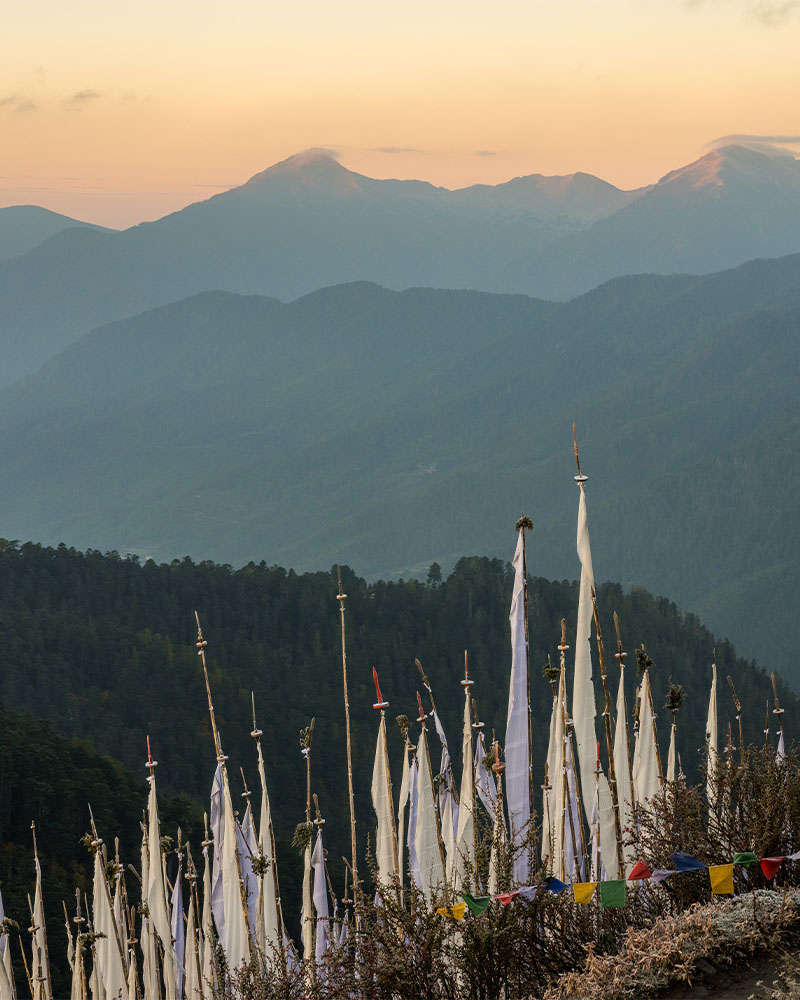
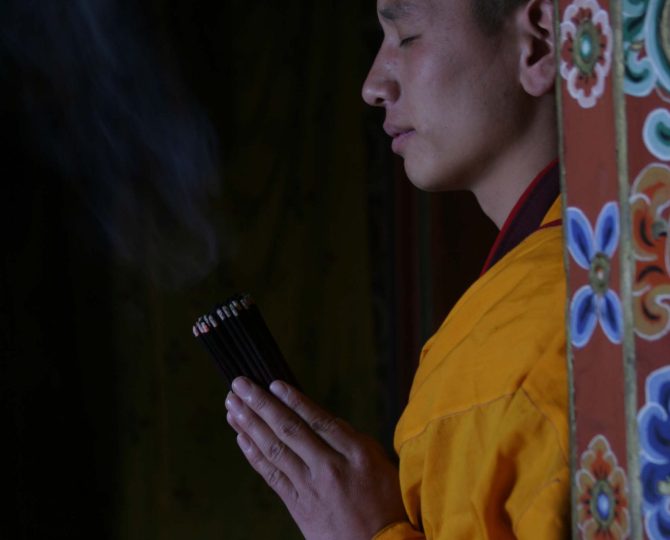
Take a quiet moment to engage in Bhutan’s deeply rooted spiritual traditions. Visit a sacred hillside to hang vibrant prayer flags, believed to carry blessings on the wind—balancing the elements and spreading goodwill across the land. Alternatively, step inside a local temple to light butter lamps, a symbolic act of offering that dispels darkness and ignorance with the light of wisdom. These age-old rituals are more than gestures—they are expressions of purification, compassion, and the journey toward enlightenment. Whether you seek reflection, connection, or simply a peaceful pause, these practices offer a meaningful way to experience Bhutan’s spiritual heart.
Haa Valley
Set out on a breathtaking mountain biking adventure into one of Bhutan’s most remote and untouched regions—the Haa Valley. This full-day guided excursion begins with a scenic drive and a challenging uphill ride along a series of dramatic switchbacks to the Chele La Pass (3,822m), Bhutan’s highest motorable pass. From this panoramic viewpoint, you’ll be rewarded with stunning vistas of Mount Jomolhari to the north and sweeping views down into the lush Haa Valley below.
Your route is flexible and can be tailored with your guide based on your preferred distance and elevation. After the climb, enjoy a thrilling descent into the quiet town of Haa (2,670m)—a charming and seldom-visited valley where life remains deeply rooted in tradition. With only a handful of modest eateries and no major tourist developments, Haa offers an authentic glimpse into Bhutanese rural life.
From Haa, continue cycling through the picturesque countryside to Katso Village, and visit the sacred Lhakhang Karpo (White Temple) and Lhakhang Nagpo (Black Temple), two historic sites steeped in local legend and spiritual significance.
This experience offers a unique blend of adventure, culture, and natural beauty—culminating with a scenic return journey to Amba Paro, where comfort and warmth await.